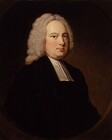
James Bradley (1692–1762) was a prominent English astronomer and priest who served as the third Astronomer Royal from 1742 and whose work laid the foundation for modern precise astronomy. He is best known for two fundamental achievements: discovering the aberration of light (1725–1728), which provided conclusive proof of the Earth's orbit around the Sun and yielded the first highly accurate calculation of the speed of light, and discovering the nutation of the Earth's axis (1728–1748) after tracking its wobble through an 18.6-year lunar cycle. An Oxford graduate mentored by his uncle James Pound, Bradley succeeded Edmond Halley at Greenwich, where he secured advanced equipment to accumulate an invaluable archive of data that was later utilized by Friedrich Wilhelm Bessel to transform the field of astronomy.